
The technical foundation search engines see first.
Crawling, indexing, site architecture, and Core Web Vitals: the layer that decides whether your content ever gets a chance to rank.
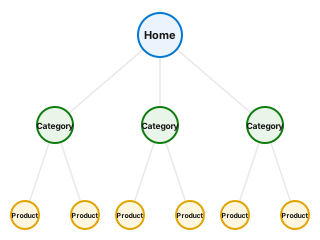
The layer search engines see before your content does
Technical SEO covers how a site is built and served: whether search engines can crawl it, whether pages get indexed, whether they render correctly, and how fast they load. It's separate from writing or content quality, but it decides whether that content ever gets a chance to rank.
A single technical issue, a blocked directory, a broken redirect chain, an unrendered JavaScript section, can quietly cap traffic on an otherwise strong site. Fixing it is often the highest-leverage SEO work available.
One weak stage blocks everything after it
A page has to clear four stages before it can rank. Technical SEO is the work of removing whatever blocks each one.
Crawl
Googlebot has to find and fetch the page. Robots.txt blocks, weak internal linking, or a slow server stop it here.
Index
A crawled page still needs a place in the index. Noindex tags, canonical conflicts, and duplicate content keep pages out.
Render
Google has to execute the page's JavaScript to see the final content. Anything that fails to render is effectively invisible.
Rank
Only pages that clear crawling, indexing, and rendering compete for rankings, so a weak earlier stage caps everything after it.
The foundation SEO is built on
Crawlability & Indexation Audit
A full crawl analysis, robots.txt review, and index coverage cleanup so search engines can reach every page that matters.
XML Sitemaps & Robots.txt Management
Sitemaps and crawl directives kept accurate as pages are added, removed, or restructured.
Site Architecture & Internal Linking
A logical URL structure and internal link graph that surfaces your most important pages to both users and crawlers.
Core Web Vitals Optimization
LCP, INP, and CLS improvements through image, script, and server-response fixes that also improve user experience.
Structured Data & Schema Markup
Schema implementation that helps search engines understand your content and display it with richer results.
JavaScript SEO & Rendering
Ensuring dynamically rendered content is fully crawlable, indexable, and not hidden behind client-side rendering issues.
Performance metrics that affect rankings and users alike
Illustrative dashboard — actual metrics are measured per site through Search Console and lab data.
What quietly breaks technical SEO
Blocking CSS or JS in robots.txt
Search engines can't judge mobile-friendliness or render quality without full access to the assets a page depends on.
No clear canonical strategy
Parameter and filter URLs compete with the primary page instead of consolidating authority into one indexable version.
Ignoring crawl budget on large sites
Bots spend their limited time on low-value pages instead of the ones that actually need to rank.
Treating speed as a one-time fix
Core Web Vitals drift as pages, images, and third-party scripts pile up if nobody keeps monitoring them.
Migrating without a redirect map
Platform or domain changes without complete one-to-one redirects erase years of accumulated rankings overnight.
Technical SEO works alongside
Common questions
How long does a technical SEO audit take?
Most audits take one to two weeks depending on site size and platform, followed by a prioritized fix roadmap.
Will fixing technical issues guarantee higher rankings?
No single fix guarantees rankings, but removing technical barriers is what lets your content and authority actually compete.
Do you work with our developers, or make the changes yourselves?
Both. We can hand off a prioritized ticket list to your team or implement changes directly depending on your setup.
What platforms do you support?
We've worked across custom-built sites, WordPress, Shopify, Webflow, and enterprise CMS platforms.
How often should technical SEO be revisited?
We recommend a full audit quarterly, with continuous monitoring of crawl activity, indexation, and Core Web Vitals in between.
Let's fix your technical foundation
Tell us about your site and platform, we will follow up with next steps.