Turn product search into organic revenue.
SEO for online stores, covering product and category pages, technical health at scale, and organic paths that end in a purchase.
Organic traffic that's built to convert, not just visit
E-commerce SEO operates at a different scale than a typical site: thousands of product and category pages, faceted navigation, seasonal inventory, and duplicate content risk from the platform itself.
Done well, it puts the right product or category page in front of a shopper at the exact moment they're searching to buy.
From search query to checkout
Every stage is an SEO opportunity, and every drop-off along the way is organic revenue left on the table.
Product Search
A shopper searches for a product, a brand, or a problem your catalog solves.
Category Page
A ranking category page gives them a curated set of relevant products to compare.
Product Page
Unique copy, reviews, and rich results build the confidence needed to click "buy."
Purchase
A fast, technically sound page is what turns that final click into revenue.
How search engines see your catalog
Every layer between the homepage and a product page is an opportunity, or a barrier, to being found and ranked.
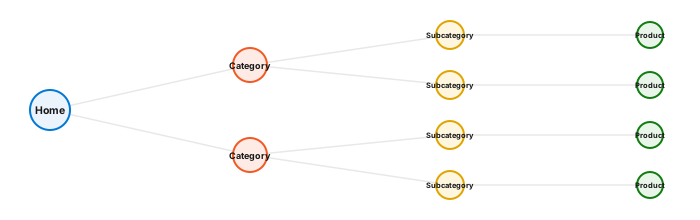
Internal linking is what makes this structure work in practice: category pages link down to subcategories and top products, product pages link back up and across to related items, and every layer stays within a couple of clicks of the homepage so crawl budget and link equity reach the pages that need to convert.
What we optimize on every page type
Unique Product Copy
Descriptions rewritten from manufacturer feeds so each page can rank instead of competing with duplicates.
Product & Review Schema
Structured data for price, availability, and ratings so listings can earn rich results in search.
Category Page Content
Category-level copy and internal links that give thin listing pages something to rank on.
Faceted Navigation Rules
Canonical and crawl controls that stop filter combinations from creating infinite duplicate URLs.
Out-of-Stock Handling
A rules-based process for discontinued and out-of-stock products so rankings aren't lost to 404s.
Image & Speed Optimization
Compressed product imagery and faster category pages that keep Core Web Vitals in range at scale.
Reported in organic revenue, not just rankings
Illustrative dashboard — actual metrics are pulled from your GA4 and Search Console data.
What costs online stores organic traffic
Letting removed products 404
Redirecting discontinued products to a relevant category preserves the rankings and links they already earned.
Copying manufacturer descriptions
Identical copy across every store selling the same product leaves nothing for Google to differentiate.
Unchecked faceted navigation
Every filter combination becomes a crawlable URL, burning crawl budget on pages that shouldn't be indexed.
Thin category pages
A grid of products with no supporting content gives search engines little reason to rank the page.
Ignoring page speed at scale
Heavy product imagery across thousands of pages compounds into a store-wide Core Web Vitals problem.
E-commerce SEO works alongside
Common questions
How do you handle thousands of product pages?
We prioritize by revenue and traffic potential, then apply templated fixes across page types instead of one-by-one edits.
Which e-commerce platforms do you work with?
Shopify, Shopify Plus, Magento, BigCommerce, WooCommerce, and custom-built storefronts.
Will you write product descriptions for us?
Yes, unique, conversion-focused copy is available as part of the engagement or as a standalone service.
How do you handle seasonal and out-of-stock products?
We build a rules-based process for redirects, soft 404 handling, and reintroducing seasonal items each year.
How soon can we expect organic revenue to grow?
Technical and content fixes typically show early movement in 60-90 days, with revenue compounding from there.
Turn browsers into buyers through search
Tell us about your store and platform, we will follow up with next steps.