Google Penalty Recovery
A structured process for diagnosing and recovering from algorithmic and manual Google penalties, then keeping them from coming back.
A sudden drop is a diagnosis problem before it's a fix problem
A sharp traffic or ranking drop can come from a manual action, an algorithm update, a technical issue, or a mix of all three. Fixing the wrong thing wastes time while the real cause keeps costing visibility.
Recovery starts with an accurate diagnosis, not a generic checklist. Expand each risk area to see what we check.
Unnatural or purchased backlinks
Link networks and paid placements that violate Google's link schemes policy — the single most common driver of manual link actions.
Thin, duplicate, or auto-generated content
Low-value pages built to target keywords instead of serve users, a common trigger behind broad core and helpful content updates.
Keyword stuffing and doorway pages
Pages built purely to funnel search traffic rather than answer intent, flagged in both manual reviews and spam-detection systems.
Cloaking or sneaky redirects
Content shown to Google that differs from what users actually see — a serious policy violation that triggers manual action quickly.
Poor UX and intrusive interstitials
Aggressive ads and pop-ups that hurt Core Web Vitals and user trust signals, often compounding an existing algorithmic drop.
From problem to restored visibility
Diagnose
Determine whether the drop is algorithmic, a manual action, or a technical issue.
Audit
A full backlink, content, and technical review to surface every risk factor.
Clean Up
Disavow toxic links, rewrite or remove thin content, and fix policy violations.
Submit & Wait
File a reconsideration request, or wait out the algorithm update with fixes already live.
Monitor
Track recovery closely and put safeguards in place so the same issue doesn't return.
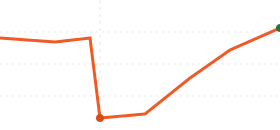
What recovery engagements typically look like
Illustrative figures — actual recovery timelines depend on penalty type and site history.
A complete recovery engagement
Manual Action & Algorithm Diagnosis
Pinpointing exactly what triggered the drop before any cleanup work begins.
Backlink Audit & Disavow File
A full link profile review and a carefully built disavow file for genuinely toxic links.
Content Cleanup & Rewrites
Thin, duplicate, or spammy content removed or rebuilt to meet quality guidelines.
Technical Violation Fixes
Cloaking, sneaky redirects, and other technical violations identified and corrected.
Reconsideration Request Support
A documented, evidence-backed request prepared and submitted on your behalf.
Post-Recovery Monitoring
Ongoing tracking and safeguards to catch new risk before it becomes a repeat penalty.
Recovery often connects to
Common questions
How do I know if I have a manual action or an algorithmic hit?
Manual actions show up in Search Console; algorithmic drops usually align with a known update and require log and ranking analysis to confirm.
How long does recovery typically take?
Manual action reconsiderations often resolve in 2-6 weeks; algorithmic recovery can take one to several update cycles.
Will disavowing links guarantee recovery?
No single fix guarantees recovery. Disavow files address one risk factor as part of a broader cleanup.
Can you help before we've been hit, as prevention?
Yes, a risk audit can catch violations and vulnerabilities before they trigger a penalty.
Do you guarantee full traffic recovery?
No one can guarantee outcomes tied to Google's systems. We commit to a thorough, evidence-based recovery process.
Lost traffic doesn't fix itself
Tell us what happened and when, we will follow up with next steps.